 BUY WEBSITES
 BUY DOMAINS
 LOGIN
LOGIN
 SIGNUP



Expired domains timeline: how long after expiry until a domain becomes available to register
Expired domains become available to register again approximately 75-80 days after they expire for a typical .com.
The countdown runs through 4 phases:
- Registrar grace period (
autoRenewPeriod, 30-45 days). - Registry Redemption Grace Period (
redemptionPeriod, 30 days). - The
pendingDeletewindow (5 days). - The registry purge that releases the name.
A registrar auction timeline is the main source of confusion. GoDaddy lists expired domains at day 26 and ends auctions at day 43. That is not the availability timeline.
Auction-routed domains still pass through the registry 30-day RGP plus 5-day pending delete before they drop.
This guide assembles the full Day-0-to-Day-80 timeline. It maps the EPP status code active at each stage. It explains the registrar-versus-registry distinction.
How long do expired domains take to become available to register?
Expired domains become available to register approximately 75-80 days after expiry for a .com. The window stacks four registry stages:
- A 30-45 day registrar grace period.
- A 30-day registry redemption period.
- A 5-day pending delete window.
- The registry purge that releases the name.
The exact day depends on the registrar grace length and whether the domain is routed to auction.
The standard .com answer is 75-80 days from expiry.
The .com lifecycle adds three registry stages before the purge opens the name for registration:
- 30-45 days of registrar grace.
- 30 days of registry redemption.
- 5 days of pending delete.
The total lands in the 75-80 day range across the surveyed registrars. The registrar grace length drives the variance.
An expired domain is not the same as an available domain.
“Expired” marks the start of the countdown, not the end. Through the grace and redemption phases the registry still holds the name for the original registrant.
The terminology distinction between expired, deleted, and dropped is documented in Expired vs deleted vs dropped: domain lifecycle disambiguation across 5 RFC 3915 states.
The day count depends on registrar grace and auction routing.
A registrar with an 18-day grace produces a shorter total than one with a 45-day grace. Domains routed to a registrar auction follow a different path documented in section 6.
The calculator below projects the drop window from an expiry date and the registrar grace length.
What are the 4 phases of the domain expiration timeline?
The expiration timeline runs through 4 phases mapped to EPP status codes. Each phase carries different recovery rights and costs:
- Grace (
autoRenewPeriod, Day 0-45). - Redemption (
redemptionPeriod, Day 30-75). - Pending delete (
pendingDelete, Day 75-80). - Purge (no EPP record, Day 80+).
autoRenewPeriod.
autoRenewPeriod). 30 days standard, up to 45 at certain registrars. The owner renews at standard cost. Recoverable.
redemptionPeriod). Fixed 30 days at the registry after the delete command. Recoverable at an $80-$200 restore fee.
pendingDelete). 5-day final window for gTLDs. No recovery is possible.
Each phase maps to a specific EPP status code.
The codes appear in any WHOIS or RDAP lookup:
autoRenewPeriodduring grace.redemptionPeriodduring RGP.pendingDeletein the final window.
Reading these codes tells the precise phase. The bare expiry date alone does not. The full status code workflow is documented in Domain expiry check: How to find a domain’s expiration date with WHOIS, RDAP, and EPP status codes.
Recovery rights and cost change at every phase boundary.
Cost and recovery rights shift at each boundary:
- Grace renews at standard cost.
- Redemption requires the restore command plus an $80-$200 fee.
- Pending delete allows no recovery.
The phase boundaries are the moments that matter for both owners tracking a renewal deadline and buyers tracking an acquisition target.
The pending delete phase is the point of no return.
Once the domain enters pendingDelete, neither the owner nor the registrar can restore it. The 5-day window is the registry’s final processing stage before the purge. The mechanics are documented in Domain pending-delete phase: Duration and mechanics.
How long can the owner still recover the domain (grace and redemption windows)?
The owner recovery window spans two phases:
- The 30-45 day registrar grace (
autoRenewPeriod), renewed at standard cost. - The fixed 30-day registry redemption (
redemptionPeriod), restored at an $80-$200 fee.
Together they give roughly 60-75 days of recovery before the domain becomes unrecoverable.
The grace period renews at standard cost with no penalty.
The registrar grace (autoRenewPeriod) runs 30 days standard, extending to 45 days at registrars such as those documented by Identity Digital. The owner renews at the normal price during this window.
DNS resolution stops within the grace period, which is the first visible signal a registration has lapsed. The phase detail is in Grace period and auto-renew grace.
The redemption period restores at an $80-$200 fee.
After the registrar issues the delete command, the registry opens a fixed 30-day Redemption Grace Period. Recovery uses the EPP restore command plus the restore fee on top of standard renewal.
The fee and restore mechanics are documented in Redemption period (RGP) explained.
Identity Digital adds a Restore Lock and Redemption Hold.
The registry operator Identity Digital documents two extra locks inside redemption:
- A 7-day Restore Lock Period after a restore request.
- A 5-day Redemption Hold Period if the name is not restored.
The registrant-of-record cannot transfer recovery rights to a third party during redemption. That rule prevents drop-catcher extortion patterns.
When exactly does a domain drop and become available?
A domain drops and becomes available after the 5-day pendingDelete window elapses, when the registry purges it. That purge moment is the exact availability point.
Verisign processes .com and .net purges in a daily batch at approximately 18:00 UTC (14:00 ET).
# WHOIS status line during the final window
Domain Status: pendingDelete https://icann.org/epp#pendingDelete

# RDAP equivalent (RFC 9083 status array)
"status": [ "pending delete" ],
"events": [ { "eventAction": "expiration", "eventDate": "2026-08-13T04:00:00Z" } ]

# pendingDelete = the domain drops within 5 days
pendingDelete status in WHOIS and RDAP is the operational signal that a domain drops within 5 days. Watching for this status removes the uncertainty in any timeline estimate.Pending delete is the final 5-day window for gTLDs.
The pendingDelete status runs 5 days for gTLDs under the standard registry agreement. No recovery is possible during it. The window is the registry’s last processing stage before the name is purged from the zone.
Verisign purges .com and .net in a daily batch at approximately 18:00 UTC.
The .com and .net registry processes deletions in a recurring daily batch documented at approximately 18:00 UTC (14:00 ET). Other registries run their own windows.
The drop timing per TLD is documented in Domain drop schedules by TLD: .com, .net, .org and Verisign mechanics.
The pendingDelete status confirms a drop within 5 days.
A pendingDelete flag in RDAP or WHOIS is the operational signal buyers watch. It removes the estimate’s uncertainty: once the status appears, the name drops within the 5-day window.
The drop-catching mechanics that follow are documented in Domain drop catching: How dropped domains become available.
How can you track the exact date a domain will drop?
Tracking the drop date combines an RDAP expiry lookup with EPP status monitoring. The watch runs in three moves:
- Read the
expirationevent for the registry date. - Add the grace plus 30-day redemption plus 5-day pending delete for an estimate.
- Watch for the
pendingDeletestatus that confirms a drop within 5 days.
Step 1: read the registry expiry date via RDAP.
The RDAP events array carries the expiration event with the canonical registry timestamp in ISO 8601 format. This is the authoritative start of the countdown.
The full RDAP lookup method is documented in Domain expiry check: How to find a domain’s expiration date with WHOIS, RDAP, and EPP status codes.
Step 2: project the phase math for an estimated drop window.
Add the registrar grace (30-45 days) plus the 30-day redemption plus the 5-day pending delete to the expiry date. The calculator above performs this projection. The estimate narrows the window to a 2-3 day range for a standard-drop .com.
Step 3: monitor the EPP status to confirm the drop.
As the estimated window approaches, check the EPP status. A pendingDelete flag confirms the drop is within 5 days, removing the estimate’s uncertainty.
Monitoring tools with a 30/14/7/1-day alert cadence automate this watch across a portfolio, documented in Domain lifecycle tracking: WHOIS, RDAP, and the workflow tools that monitor every status code.
Why does the GoDaddy timeline look different from the standard 80 days?
GoDaddy’s timeline (day 18 leaves the account, day 26 auction, day 43 auctions end) is the registrar auction timeline, not the availability timeline.
Auction-routed domains that do not sell return to the registry at day 43, then pass through the 30-day RGP plus 5-day pending delete before they drop, landing near day 78.
The GoDaddy milestones run from day 18 to day 43.
GoDaddy documents a four-stop auction sequence from account removal to the auction close, mapped in Figure 3 above. A current registrant can recover the domain with a redemption fee through this window.
The auction routing detail is in Domain auction routing: Why expired domains skip the drop phase.
Day 43 returns the domain to the registry, it does not drop it.
If a domain receives no winning bid, GoDaddy requests the registry refund and the domain returns to the registry at day 43. It does not become available at that moment.
The registry then applies its own 30-day Redemption Grace Period and 5-day pending delete.
Auction-won domains never reach the drop.
A domain that sells at auction transfers to the winning bidder and never enters the registry RGP or pending delete. Only unsold domains continue down the availability timeline.
This is why a target domain at a registrar auction is acquired by bidding, not by waiting for the drop.
How does the timeline vary across registrars and TLDs?
The timeline varies by registrar grace length (18 days at GoDaddy to 45 days at others) and by TLD. The registry Redemption Grace Period is fixed at 30 days for gTLDs.
ccTLDs differ from the gTLD 80-day model. Certain ccTLDs have no grace period. Others vary the redemption and pending-delete windows.
| Path | Grace | Redemption | Pending delete | Total to availability |
|---|---|---|---|---|
| Standard gTLD (30-day grace) | 30 days | 30 days | 5 days | ~65-80 days |
| Extended grace (45-day) | 45 days | 30 days | 5 days | ~80 days |
| GoDaddy (auction route, unsold) | 18 days to account | 30 days (post day-43) | 5 days | ~78 days |
| ccTLD (varies) | 0-30 days | varies | 0-5 days | varies widely |
Registrar grace length drives the gTLD variance.
The registry phases (30-day RGP, 5-day pending delete) are constant for gTLDs, so the registrar grace period (18 to 45 days) accounts for the bulk of the spread in total time to availability.
The per-registrar grace comparison is documented in Domain registrar policies compared: Grace periods, transfer locks, and ICANN compliance across 10 registrars.
ccTLDs diverge from the gTLD 80-day model.
Country-code TLDs set their own lifecycle policies. Certain ccTLDs have no grace period. Others compress or extend the redemption and pending-delete windows.
The major ccTLD schedules are documented in Domain drop schedules for major ccTLDs: .uk, .de, .au, .eu and country-code mechanics.
The registry redemption period is fixed for gTLDs.
The 30-day Redemption Grace Period is set by ICANN policy under the standard registry agreement and does not vary across gTLD registries. This fixed window is the anchor point for any timeline calculation regardless of registrar.
What questions do owners and buyers ask about the expiration timeline?
Owners and buyers bring five recurring questions to the timeline, answered in the cards below. They span the wait to availability, the renewal window, the GoDaddy difference, the drop signal, and recovery rights at each phase.
Q1How long after a domain expires does it become available?
Approximately 75-80 days for a .com: 30-45 day registrar grace, 30-day registry redemption, 5-day pending delete, then the registry purge.
The exact day depends on the registrar grace length and whether the domain is routed to auction.
Q2How long do I have to renew my domain after it expires?
Roughly 60-75 days of recovery: the 30-45 day grace period (renew at standard cost) plus the 30-day redemption period (restore at an $80-$200 fee).
After the redemption period and the 5-day pending delete, recovery is no longer possible.
Q3Why is the GoDaddy timeline different from the standard 80 days?
GoDaddy’s day-43 milestone is the auction end, not the drop. Unsold domains return to the registry at day 43, then pass through the 30-day redemption plus 5-day pending delete, landing near day 78.
The registrar timeline and the registry availability timeline run in sequence.
Q4How can I tell exactly when a domain will drop?
Watch the EPP status code. A pendingDelete flag in RDAP or WHOIS means the domain drops within 5 days.
For .com and .net, the registry purges in a daily batch at approximately 18:00 UTC, which narrows the drop to a specific window.
Q5Is recovery still possible during redemption and pending delete?
During redemption, yes: the owner restores the domain via the EPP restore command plus an $80-$200 fee.
During pending delete, no: the 5-day window allows no recovery for either the owner or the registrar.
Q6Do all TLDs follow the same 80-day timeline?
No. The 75-80 day model applies to gTLDs such as .com. ccTLDs set their own policies: certain ccTLDs have no grace period, while others vary the redemption and pending-delete windows.
The registry redemption period is fixed at 30 days for gTLDs.
How does SEO Domains acquire domains at the end of the timeline?
SEO Domains acquires inventory through ICANN-accredited drop-catching at the registry-release moment, the end of the expiration timeline. The 220,000+ catalogue surfaces post-purge domains at fixed prices, so buyers skip the 75-80 day wait and the open-pool drop competition.
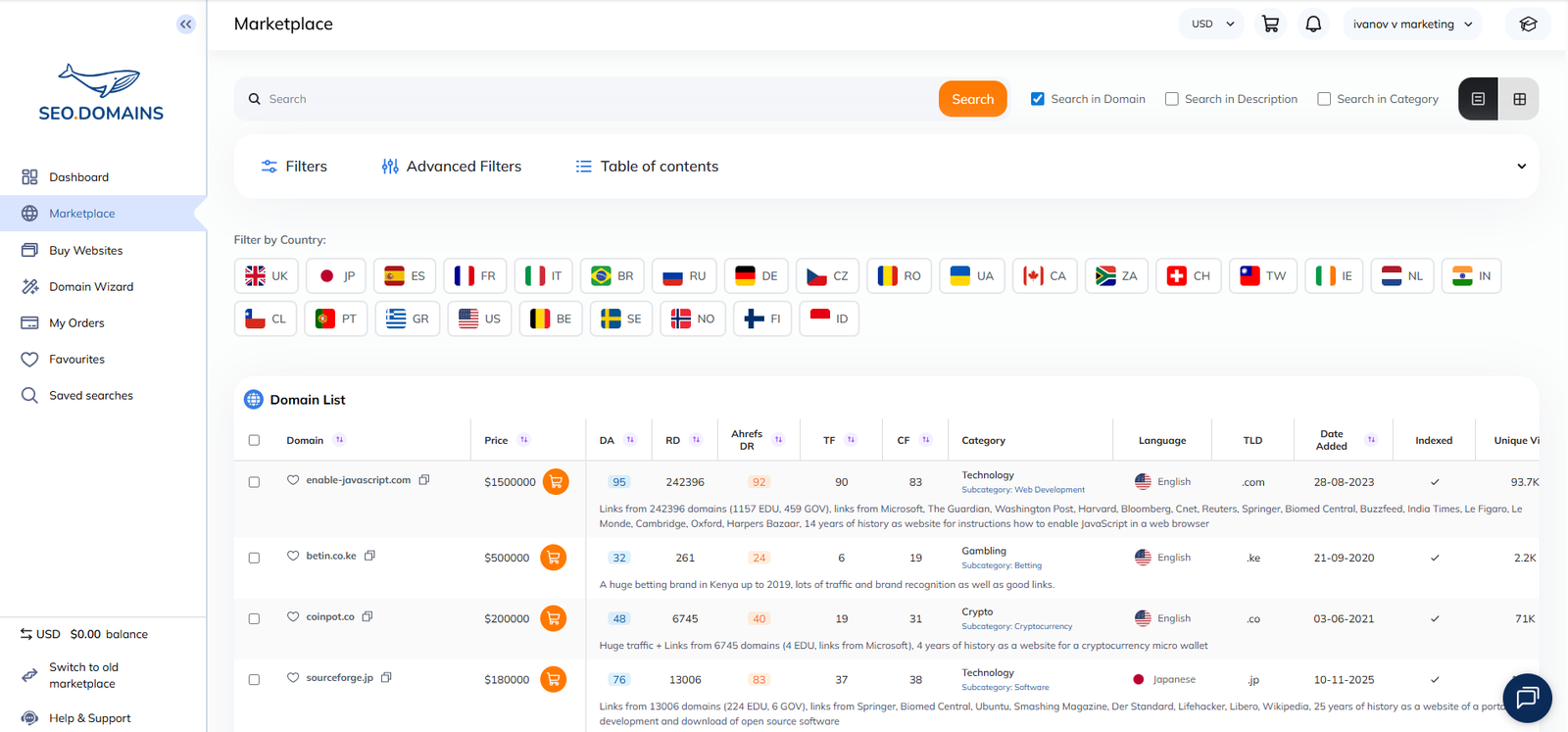
Drop-catching operates at the registry-release moment.
The catalogue is built by catching domains at the purge moment (Day 80+ for a typical .com) through ICANN-accredited drop-catching. The acquisition point sits at the final stage of the timeline documented in this guide.
The catalogue removes the wait and the open-pool competition.
Registering a dropped domain in the open pool means tracking the timeline and competing with other drop-catchers at the release moment.
The catalogue surfaces inventory already acquired, listed at fixed prices, so buyers skip both the 75-80 day wait and the competitive drop.
Acquisition completes through ICANN-accredited transfer.
Each catalogue domain transfers to the buyer’s registrar of choice through standard ICANN-accredited transfer. Buyers route inventory to any preferred registrar after acquisition.
Aged-domain SEO value depends on documented prior history.
For 301-redirect strategies, the SEO Domains analytical desk tracks a consistent pattern across acquisitions. A 301-redirected aged domain carries accumulated link equity to the destination when the prior active history is documented and the redirect target stays topically aligned.
A freshly re-registered expired domain with no documented continuity reads as a new entity. The catalogue’s curated history records support the buyer’s content-continuity decisions.
Explore the inventory in the SEO Domains marketplace.
