 BUY WEBSITES
 BUY DOMAINS
 LOGIN
LOGIN
 SIGNUP



Expired domains: expired vs deleted vs dropped across the 5-state RFC 3915 domain lifecycle
Buyers researching expired domains meet three overlapping terms: “expired”, “deleted”, and “dropped” each describe a different position in the lifecycle, and each triggers a different EPP status code defined in RFC 3915 (S. Hollenbeck, VeriSign).
“Expired” is the umbrella term covering the 30-45 day autoRenewPeriod plus the 30-day redemptionPeriod. “Dropped” is the industry colloquial term for the registry purge moment described in RFC 3915 §2 step 10.
“Deleted” carries three distinct industry meanings: voluntary Add Grace Period deletion, the EPP `<delete>` command transition into RGP, and a colloquial synonym for “dropped”.
SEO Domains operates at three buyer entry points across the lifecycle: pre-drop auction routing, at-drop ICANN-accredited drop-catching, and post-drop 220,000+ curated catalogue.
What 5-state lifecycle do “expired”, “deleted”, and “dropped” reference?
Domains traverse 5 distinct lifecycle states: Active (registered and resolving), Expired (umbrella for Days 1-75 post-expiry), Deleted (state transition triggered by the EPP `<delete>` command), Pending Delete (5-day irreversible window), and Purged/Dropped/Available (post-purge re-registration pool).
The 3 colloquial terms (“expired”, “deleted”, “dropped”) map to specific positions inside the 5-state taxonomy.
ok or registrar-prohibited locks. Renewal at standard cost.
autoRenewPeriod per RFC 3915 §3.1.
redemptionPeriod at the registry.
<rgp:restore op="request"/> command + $80-$200 fee.
pendingDelete.
The 5-state taxonomy maps colloquial terms to formal EPP states.
Industry vocabulary collapses 5 distinct EPP states into 3 colloquial labels. The mapping creates the regular confusion documented in NamePros forum threads where new operators confuse “deleted” (any of 3 industry meanings) with “dropped” (post-purge availability). The 5-state taxonomy provides the foundation for the per-term distinctions in the H2 sections below.
Active is the only state during which DNS resolution and renewal happen at standard cost.
The Active state encompasses the paid registration period. DNS resolution operates normally and renewal completes at the registrar’s standard price. The state ends at the registration end date. After expiry, DNS resolution suspension policies vary across registrars documented in Domain registrar policies compared: Grace periods, transfer locks, and ICANN compliance across 10 registrars.
Expired covers the 30-45-day grace plus the 30-day Redemption Grace Period.
“Expired” operates as an umbrella covering 2 distinct EPP states: autoRenewPeriod at the registrar layer (30-45 days at standard renewal cost) and redemptionPeriod at the registry layer (30 days at $80-$200 restoration cost).
The two-layer structure produces the typical 60-75 day post-expiry recovery window documented in sibling article Grace period and auto-renew grace.
What are expired domains and what makes a domain “expired”?
Expired domains are names past their registration end date but not yet purged from the registry. The term covers Days 1-75 post-expiry across the autoRenewPeriod (registrar grace, 30-45 days) plus the redemptionPeriod (registry, 30 days). Both EPP states fall under the “expired” umbrella in industry usage.
This grace period is provided after a domain name registration period expires and is extended (renewed) automatically by the registry.
RFC 3915 §3.1 · S. Hollenbeck, VeriSign · Domain Registry Grace Period Mapping for the Extensible Provisioning Protocol (EPP)
The autoRenewPeriod is the registrar-level grace at 30-45 days standard renewal cost.
RFC 3915 §3.1 defines the autoRenewPeriod as the grace following automatic registry renewal at expiry. The registrar receives a credit for the renewal fee if the domain is deleted within this window.
The duration varies per registry operational policy: 30 days as the standard gTLD rate, with registrar grace ranging 18-45 days across the 10 registrars surveyed in sibling article #11. The window provides registrants the standard-price renewal opportunity.
The redemptionPeriod follows, with restoration via the EPP Restore command plus $80-$200 RGP fee.
After the registrar issues the EPP `<delete>` command, the domain transitions into the redemptionPeriod status code at the registry.
The fixed 30-day window allows restoration through the EPP <rgp:restore op="request"/> command documented by Identity Digital. The restoration triggers a non-refundable RGP fee in the $80-$200 range documented in Redemption period (RGP) explained.
DNS resolution stops within 8 days of expiry per ICANN ERRP requirements.
The ICANN ERRP (Expired Registration Recovery Policy, effective 31 August 2013) requires registrars to interrupt DNS resolution for at least 8 days within the auto-renew grace period.
The exact suspension timing varies per registrar policy: Cloudflare, Porkbun, and Namecheap implement different suspension cadences documented in sibling article #11. The DNS-stop moment is the operational signal that the domain has entered the “expired” lifecycle.
What is a deleted domain and what 3 meanings does “deleted” carry across the industry?
A deleted domain carries 3 distinct meanings across the industry: (1) voluntary Add Grace Period deletion within 5 days of registration; (2) the EPP `<delete>` command transition triggering RGP; (3) colloquial synonym for “dropped” (purged, available). Confusion follows from collapsing the three meanings into one term.
Meaning 1 · AGP voluntary delete
Registrar issues `<delete>` within 5 calendar days of registration. The registrar receives a full credit refund under the ICANN Add Grace Period policy. The 2008 AGP Limits Policy capped abuse at 10% of net new registrations or 50 domains, whichever is greater.
Lifecycle position: Day 0-5 post-registration.
Meaning 2 · EPP <delete> transition
Per RFC 3915 §3.1, the `<delete>` command moves the domain into the redemptionPeriod status code. The domain remains recoverable via the EPP <rgp:restore op="request"/> command + $80-$200 RGP fee for the 30-day window.
Lifecycle position: Any time the registrar issues `<delete>`.
Meaning 3 · Colloquial = dropped
DomCop’s glossary states “A deleted domain (also known as a Dropped Domain)”. In this register, “deleted” means the domain has completed the full lifecycle and is purged from the registry, available for re-registration in the public pool.
Lifecycle position: Post-purge (Day 80+ for .com).
Meaning 1: voluntary AGP delete grants the registrar a full credit refund.
The ICANN Add Grace Period policy provides a 5-calendar-day window post-registration during which the registrar can issue `<delete>` and receive a full credit from the registry.
The 2008 AGP Limits Policy capped abuse at 10% of net new registrations or 50 domains (whichever is greater), producing a 99.7% decline in AGP deletions per the ICANN End of Domain Tasting Status Report.
The policy exists to handle typos and registration errors.
Meaning 2: the EPP `<delete>` command moves the domain into the redemptionPeriod status code.
RFC 3915 §3.1 defines redemptionPeriod as the status applied “to describe a domain for which a `<delete>` command has been received, but the domain has not yet been purged because an opportunity exists to restore the domain and abort the deletion process.”
The transition is technical. The registrar’s `<delete>` command produces the registry-side redemptionPeriod state.
Restoration uses the EPP <rgp:restore op="request"/> command per RFC 3915 and Identity Digital documentation.
Meaning 3: colloquial industry usage where “deleted” equals “dropped”.
Industry blogs and glossaries collapse “deleted” and “dropped” into synonyms when describing post-purge available domains.
DomCop’s published glossary states “A deleted domain (also known as a Dropped Domain) is a domain that has completed the entire expiration lifecycle without being renewed.” The register produces buyer confusion when “deleted” appears in listings: does the buyer face recoverable RGP-state inventory or post-purge available inventory?
The three meanings produce regular acquisition confusion in the buyer community.
NamePros forum thread #1246022 documents the confusion: community moderators and VIP members clarify that “deleted” carries different meanings in different contexts.
The disambiguation matters at the acquisition moment: a “deleted” domain in Meaning 2 (RGP) remains owner-recoverable for 30 days; a “deleted” domain in Meaning 3 (post-purge) is open for first-come-first-served registration.
Mistaking the two produces failed acquisition attempts.
What is a dropped domain and is “dropped” the same as “purged”?
A dropped domain is the colloquial industry term for a domain that has been purged from the registry per RFC 3915 §2 step 10 and is available for re-registration. The RFC formal term is “purged”; “dropped” is the equivalent industry vocabulary. The two terms describe the same registry operation in different registers.
The domain name is purged once the pending delete period elapses.
RFC 3915 §2 step 10 · S. Hollenbeck, VeriSign · Domain Registry Grace Period Mapping
“Purged” is the RFC 3915 technical term; “dropped” is the industry colloquial term for the same event.
RFC 3915 (S. Hollenbeck, VeriSign) uses “purged” exclusively as the formal term for the registry-side delete-and-release operation. The document contains zero occurrences of “dropped”.
The industry register inverts the convention: “dropped” appears in registrar blogs, drop-catching services, and buyer forums while “purged” rarely surfaces outside RFC and technical EPP documentation. Both terms describe identical registry operations.
The purge happens after the 5-day pendingDelete window elapses without a restore command.
The transition from pendingDelete to purged is automatic at the registry. The 5-day pendingDelete window provides the final irreversible window during which the domain cannot be restored.
Once the window elapses, the registry processes the purge in its scheduled drop window. The pendingDelete duration is 5 days for gTLDs per the standard ICANN registry agreement documented in Domain pending-delete phase: Duration and mechanics.
Verisign purges .com domains in a daily batch at 14:00 ET (18:00 UTC EDT).
Verisign operates the .com registry and processes the daily purge in a recurring batch documented at 14:00 Eastern Time (18:00 UTC under EDT).
The predictable drop window enables the drop-catching infrastructure documented in Domain drop catching: How dropped domains become available and the timing data in Domain drop schedules by TLD: .com, .net, .org and Verisign mechanics.
CatchDoms uses “purged” in its definition but does not cite RFC 3915.
The #1-ranked SERP competitor for “dropped domains vs expired domains” uses “purged” in its definition (“finished the full lifecycle and got purged from the registry”) without citing RFC 3915 as the source.
The pattern repeats across the top 10 SERP results: industry blogs use the technical term without grounding it in the standards body that defines it. RFC 3915 grounding is the differentiator for buyer-trust signal.
How do the 3 colloquial terms map to EPP status codes?
Three colloquial terms map to four EPP status codes defined in RFC 3915. Expired domains carry autoRenewPeriod (registrar grace) or redemptionPeriod (registry RGP). Deleted domains transition into redemptionPeriod. Dropped/purged domains carry no EPP record (available pool). The pendingDelete code marks the final pre-purge window.
| Colloquial term | EPP status code (RFC 3915) | Duration | Recoverable by | EPP recovery command |
|---|---|---|---|---|
| Expired (umbrella) | autoRenewPeriod | 30-45 days | Original registrant via renewal | <renew> (standard cost) |
| Expired (umbrella) | redemptionPeriod | 30 days fixed | Original registrant via Restore | <rgp:restore op="request"/> + $80-$200 fee |
| Deleted (transition) | Triggers redemptionPeriod | 30 days fixed | Original registrant via Restore | <rgp:restore op="request"/> + $80-$200 fee |
| Pending delete | pendingDelete | 5 days (gTLDs) | No recovery available | None (irreversible) |
| Pending restore | pendingRestore | 7 days | Registrar via Restore Report | RFC 3915 restore-report XML |
| Dropped (colloquial) / Purged (RFC) | No EPP record | Continuous | Anyone via re-registration | Standard <create> EPP command |
The autoRenewPeriod covers Days 1-30 to 1-45 post-expiry depending on the registrar.
The autoRenewPeriod status applies at the moment the registry auto-renews the domain at expiry.
The duration is set as registrar operational policy: 30 days standard at gTLD registrars, extending to 45 days at Porkbun (10-day auto-renew grace beyond the 30-day base).
During this window the domain renews at standard cost without RGP fees.
The redemptionPeriod covers a fixed 30-day window after `<delete>` command processing.
The redemptionPeriod status applies the moment the registrar issues the EPP `<delete>` command. RFC 3915 §3.1 defines the window’s purpose: an opportunity to restore the domain via the Restore command before purge.
Identity Digital documents three distinct windows around the restoration process:
- 30-day RGP. The redemption window during which restoration remains available.
- 5-day Restore Lock Period. A post-restoration hold applied after a successful Restore.
- 5-day Redemption Hold Period. A final hold applied when the domain is not restored after 30 days.
The RGP fee structure depends on the registry’s published wholesale fee plus the registrar’s markup.
The pendingDelete is the 5-day final window before purge with no EPP restoration available.
The pendingDelete status applies after the 30-day redemptionPeriod elapses without a Restore Request. The 5-day window is registry-set operational policy under the standard ICANN registry agreement.
The domain cannot be restored during pendingDelete; the EPP Restore command does not function. The window provides the operational signal for drop-catching engagement documented in sibling article #5.
The pendingRestore status indicates an in-progress restore from RGP back to active.
The pendingRestore status applies after the registrar submits the Restore Request. The 7-day window allows the registrar to submit the RFC 3915 Restore Report, which carries six required fields:
preDataandpostDatasnapshots of the registration record.delTimeandresTimetimestamps for the delete and restore events.resReasonandstatementfields documenting the restoration justification.
If the Restore Report submits and validates, the domain returns to Active. If it fails to validate within the 7-day window, the domain returns to redemptionPeriod.
What synonyms appear in formal, colloquial, legal, and registrar-agreement registers?
Industry vocabulary varies across 4 distinct registers: formal (RFC 3915: autoRenewPeriod, redemptionPeriod, pendingDelete, purged); colloquial (industry: expired, deleted, dropped, available); legal (cancelled, released); registrar-agreement (lapsed). All 4 registers describe the same lifecycle and create regular newcomer confusion when terms cross registers.
| Lifecycle event | Formal (RFC 3915) | Colloquial (industry) | Legal | Registrar agreement |
|---|---|---|---|---|
| Past registration end date | autoRenewPeriod | Expired | Cancelled (registrant-initiated) | Lapsed registration |
| Registrar issues <delete> | redemptionPeriod triggered | Deleted | Released to RGP | Lapsed and deleted |
| 5 days pre-purge | pendingDelete | Pending delete | Pending release | Pending deletion |
| Registry purge moment | Purged | Dropped | Released to public pool | Released registration |
| Post-purge availability | (no status, purged) | Available / Dropped | Available for re-registration | Available |
“Lapsed registration” is the registrar-agreement standard term in ToS language.
Namecheap, GoDaddy, and the registrar-consensus terms of service use “lapsed” to describe a registration whose paid period ended without renewal.
The term carries contractual weight that “expired” does not, because lapsed-registration clauses trigger specific registrar rights documented in the agreement: DNS suspension cadence, auction routing eligibility, deletion timing, and post-lapse fee schedules.
Operators reading registrar contracts encounter “lapsed” where buyer-facing material says “expired”.
“Cancelled” is registrant-initiated and overlaps with voluntary AGP delete.
A cancelled registration is the registrant’s explicit request to terminate the registration. The terminology appears in customer-service workflows and refund policies. Within the 5-day Add Grace Period, cancellation triggers a full refund under the ICANN AGP policy.
Post-AGP cancellation does not produce a refund and overlaps with the EPP `<delete>` command transition into redemptionPeriod.
“Released” describes registry-side return to the available pool.
Identity Digital’s help articles use “released into the pool of available names” as the formal post-purge language.
The term reflects the registry-operational view of the purge: the domain is released from registry control back to public re-registration availability.
“Released” appears in registry documentation and ICANN policy text; it rarely appears in retail-registrar buyer-facing material.
“Purged” is the RFC 3915 §2 technical term; “dropped” is the industry colloquial equivalent.
Both terms describe the same registry operation: the final removal of the domain from the registry’s active records after the pendingDelete window elapses. The formal/colloquial split reflects the technical-vs-marketing register difference.
RFC 3915 contains zero “dropped” occurrences; industry blogs contain abundant “dropped” usage with rare “purged” appearances. Cross-referencing both registers is the disambiguation discipline buyers apply when reading mixed-register documentation.
When does each term matter in a buyer’s acquisition decision?
Each term signals a different acquisition path: “expired” means recoverable by original owner (backorder); “pending delete” means imminent purge (drop-catching engagement); “deleted” means in RGP (still recoverable); “dropped” means available for direct registration or curated catalogue acquisition. The term seen on a listing determines the buyer action and timing.
| Term seen on listing | Practical meaning | Buyer action | Lifecycle timing | Acquisition path |
|---|---|---|---|---|
| Expired | In grace or RGP; recoverable by original owner | Backorder + wait; or engage auction routing | Day 1-75 post-expiry | Backorder service + monitor |
| Auction | Routed to GoDaddy / Newfold partner marketplace, skipping the drop | Bid through auction marketplace | Day 25-43 (GoDaddy timeline) | Auction bid |
| Deleted | In redemptionPeriod; recoverable by original owner via Restore | Backorder + wait; original owner restoration remains possible | Day 30-75 post-expiry | Backorder service + monitor |
| Pending Delete | ~5 days from registry purge; no restoration available | Engage drop-catching service or pre-list on backorder | Day 75-80 post-expiry | Drop-catching engagement |
| Dropped / Purged | Available for first-come-first-served registration | Register immediately at any ICANN-accredited registrar | Day 80+ post-expiry | Standard registration OR curated catalogue acquisition |
“Expired” on a listing means the domain is still recoverable by the original registrant.
Listings labelled “expired” sit in the autoRenewPeriod or redemptionPeriod. The original registrant retains restoration rights for 60-75 days post-expiry depending on the registrar.
Buyer action: backorder the domain through a service that monitors the lifecycle and engages drop-catching at the registry release moment. Direct acquisition is unavailable during the recoverable phase.
“Pending Delete” signals imminent purge and the operational moment for drop-catching engagement.
The pendingDelete status applies in the 5-day window before the registry purge. The original registrant cannot restore the domain during this window.
Drop-catching services queue acquisition attempts at the registry release moment (18:00 UTC daily for .com per Verisign). The pendingDelete signal is the operational trigger for buyers seeking the specific named inventory before competitive open-pool registration.
“Dropped” listings are available for first-come-first-served registration or curated acquisition.
“Dropped” labels apply to domains that completed the lifecycle and were purged from the registry. The post-purge availability opens the domain for any ICANN-accredited registrar’s standard <create> EPP command at standard registration cost.
Curated catalogues including the SEO Domains marketplace surface dropped inventory already acquired through drop-catching at fixed prices, removing the open-pool competition layer.
“Auction” routing bypasses the standard drop and surfaces in GoDaddy / Newfold marketplaces.
Approximately 30-40% of expired domains skip the standard drop phase and route to auction marketplaces operated by GoDaddy and Newfold Digital partners (NameJet, SnapNames, DropCatch).
The auction-routing decision happens during the post-expiry status windows documented in Domain auction routing: Why expired domains skip the drop phase. Buyer action for auction-routed inventory: bid through the partner marketplace before the auction close.
What questions do buyers ask about expired, deleted, and dropped terminology?
Buyers ask whether “expired” equals “deleted”, why “deleted” means 3 different things, whether “purged” equals “dropped”, how long deletion takes, whether a deleted domain is recoverable, and what distinguishes “dropped” from “pending delete”. The terminology overlap creates regular acquisition confusion documented in NamePros forum threads.
Q1Is an expired domain the same as a deleted domain?
No. An expired domain sits in the autoRenewPeriod or redemptionPeriod (Days 1-75 post-expiry); the original registrant retains restoration rights. A deleted domain describes the EPP state transition when the registrar issues `<delete>`, moving the domain into redemptionPeriod. The two terms describe overlapping but distinct lifecycle positions.
Q2Why does “deleted” mean 3 different things across the industry?
“Deleted” carries 3 industry meanings: (1) voluntary Add Grace Period deletion within 5 days of registration; (2) the EPP `<delete>` command transition into redemptionPeriod; (3) colloquial synonym for “dropped”.
DomCop’s glossary states “A deleted domain (also known as a Dropped Domain)” reflecting Meaning 3. The 3 meanings appear in different document types (registrar technical docs, ICANN policy, industry blogs).
Q3Is “purged” the same as “dropped”?
Yes. RFC 3915 §2 step 10 uses “purged” as the formal technical term for the registry-side delete-and-release operation. Industry blogs and drop-catching services use “dropped” for the same event. RFC 3915 contains zero “dropped” occurrences; both terms describe identical registry operations in different vocabulary registers.
Q4Can a deleted domain be recovered?
Yes, during the 30-day redemptionPeriod (RGP). The original registrant initiates the EPP <rgp:restore op="request"/> command through the registrar and pays the $80-$200 RGP fee plus the standard renewal cost.
After the 30-day RGP window elapses, the domain transitions into the 5-day pendingDelete window during which no restoration is available.
Q5How long after expiry is a domain available for re-registration?
Approximately 75-80 days for .com domains under the Verisign lifecycle: 30-45 days autoRenewPeriod + 30 days redemptionPeriod + 5 days pendingDelete + purge at the daily Verisign drop window (18:00 UTC EDT). The exact timing varies by TLD documented in sibling article Domain drop schedules by TLD: .com, .net, .org and Verisign mechanics.
Q6What is the difference between dropped and pending delete?
Pending delete is the 5-day final window before purge; the EPP status is pendingDelete and no restoration is available. Dropped describes the post-purge state where the domain has no EPP record and is available for re-registration. Pending delete precedes dropped by 5 days for gTLDs.
How does SEO Domains operate across the 3 buyer entry points of the 5-state lifecycle?
SEO Domains operates 3 distinct buyer entry points across the lifecycle: pre-drop auction routing for named-domain bidders, at-drop ICANN-accredited drop-catching at registry release, and post-drop access to the 220,000+ curated catalogue at fixed prices transferable to any ICANN-accredited registrar.
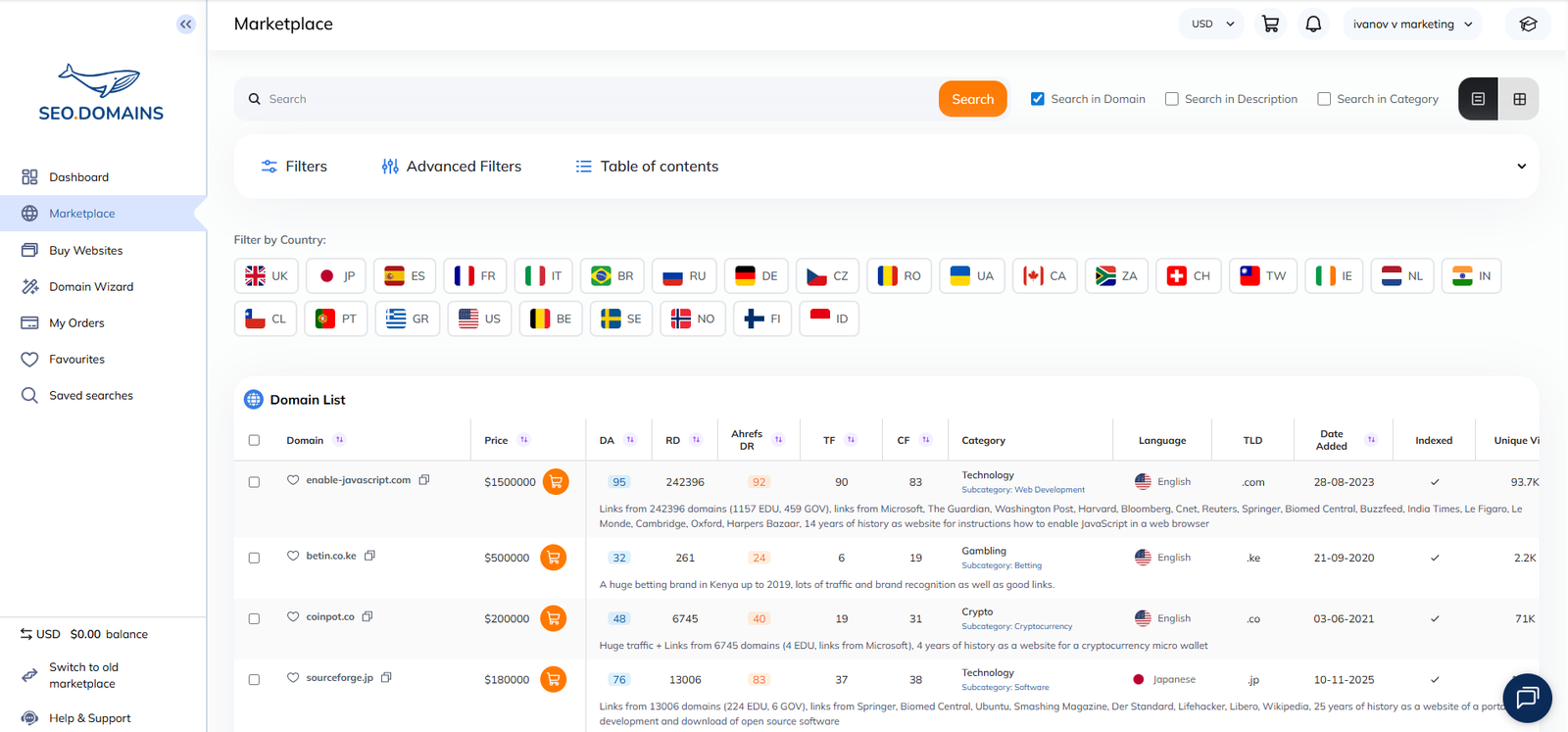
Entry 1 · Pre-drop auction routing
Buyers seeking a specific named domain before purge engage the auction layer. Approximately 30-40% of expired inventory routes to GoDaddy and Newfold Digital partner marketplaces (NameJet, SnapNames, DropCatch) bypassing the standard drop.
Lifecycle phase: Expired (autoRenewPeriod / redemptionPeriod).
Entry 2 · At-drop drop-catching
SEO Domains’ ICANN-accredited drop-catching operates at the registry purge moment. Buyers backorder named inventory or subscribe to acquisition queues. The 18:00 UTC daily Verisign drop window for .com domains determines the operational timing.
Lifecycle phase: Pending delete to Purge.
Entry 3 · Post-drop catalogue
The 220,000+ aged-domain catalogue surfaces inventory already acquired through drop-catching, listed at fixed prices. Buyers acquire post-purge stock at the catalogue rate and transfer via ICANN-accredited EPP transfer to the buyer’s registrar of choice.
Lifecycle phase: Dropped / Available.
Entry point 1: pre-drop auction routing for named-domain bidders.
Buyers seeking a specific named domain before purge engage the auction layer documented in sibling article #8. Approximately 30-40% of expired inventory routes to GoDaddy and Newfold Digital partner marketplaces (NameJet, SnapNames, DropCatch) bypassing the standard drop. The auction layer surfaces during Days 25-43 of the GoDaddy expired-domain timeline.
Entry point 2: at-drop ICANN-accredited drop-catching at registry release.
SEO Domains’ ICANN-accredited drop-catching operates at the registry purge moment (Day 80+ typical for .com per the Verisign 18:00 UTC daily window documented in sibling article #6). Buyers backorder named inventory or subscribe to acquisition queues. The drop-catching layer covers the operational moment between pendingDelete elapse and open-pool registration.
Entry point 3: post-drop curated catalogue acquisition at fixed prices.
The 220,000+ aged-domain catalogue surfaces inventory already acquired through drop-catching at the registry release moment.
Listings appear at fixed prices and transfer via ICANN-accredited EPP transfer to the buyer’s registrar of choice (Cloudflare, Porkbun, Namecheap, or any ICANN-accredited registrar).
The catalogue removes the open-pool competition layer and the per-domain drop-catching engagement.
Aged-domain SEO value depends on documented prior history and topical alignment of the redirect target.
For 301-redirect strategies, the SEO Domains analytical desk tracks a consistent pattern across acquisitions: a 301-redirected aged domain carries accumulated link equity to the destination when the prior active history is documented and the redirect target stays topically aligned.
A fresh-registered expired domain with no documented continuity reads as a new entity. Aggressive expired-domain redirect schemes in PBN contexts carry elevated risk under current search-engine spam enforcement.
The catalogue’s curated history records support the buyer’s content-continuity decisions.
Three entry points, one acquisition path. SEO Domains operates at pre-drop auction routing, at-drop ICANN-accredited drop-catching, and the post-drop 220,000+ curated catalogue. Buyers acquire post-purge inventory at fixed prices and transfer to any ICANN-accredited registrar after acquisition. Search the SEO Domains marketplace →
