 BUY WEBSITES
 BUY DOMAINS
 LOGIN
LOGIN
 SIGNUP



Average Domain Authority by industry: Benchmark scores across 7 niches
Average Domain Authority by industry varies from a top-10 SERP median near 35 in niche content and local business to a median near 80 in finance and insurance. The link-graph strength of the competitors ranking in each vertical sets the bar.
Across 7 niches the top-10 SERP Domain Authority runs from 25-50 in niche content, through 35-60 in e-commerce and affiliate, up to 70-90 in finance. The score reads about 5 points below Domain Rating in the same niche, because of the Moz Spam Score adjustment and the slower monthly Mozscape refresh.
SEO Domains operates the curated marketplace with a 220,000+ pre-screened catalogue from $100 entry-level domains through $1.5 million premium acquisitions, ICANN-accredited. Every listing surfaces Domain Authority alongside Domain Rating, Trust Flow, and Citation Flow under a 7-vector inheritance screen. Buyers read each candidate against the niche-relative benchmark before acquisition.
What is the average Domain Authority by industry
The average Domain Authority by industry is the median Domain Authority of the top-10 SERP competitors in that vertical, ranging from 25-50 in niche content and local business to 70-90 in finance and insurance.
The number that counts as the average depends on which competitors rank for the buyer’s target queries. Domain Authority is a relative comparative proxy on the Moz machine-learning model.
The 7 niches below set the benchmark bands that frame an acquisition decision in each vertical.
| Industry niche | Top-10 SERP DA range | Median competitor DA | Aged-domain entry target |
|---|---|---|---|
| Finance and insurance | 70-90 | ~80 | DA 80+ to lead, DA 70+ to enter |
| Health and YMYL | 65-85 | ~75 | DA 75+ to lead, DA 65+ to enter |
| Legal and law firms | 60-80 | ~70 | DA 70+ to lead, DA 60+ to enter |
| Technology and SaaS | 50-75 | ~60 | DA 60+ to lead, DA 50+ to enter |
| iGaming | 50-75 | ~60 | DA 60+ to lead, DA 50+ to enter |
| E-commerce and affiliate | 35-60 | ~45 | DA 45+ to lead, DA 35+ to enter |
| Niche content and local business | 25-50 | ~35 | DA 35+ to lead, DA 25+ to enter |
The industry benchmark is the niche-relative median, not an absolute grade.
An absolute Domain Authority tier describes link-profile depth on the Moz scale, and the niche median translates that depth into a competitive verdict.
Finance and insurance concentrate enterprise brands and established review sites, so the median top-10 SERP competitor sits near Domain Authority 80. Niche content and local business draw a thinner competitor set, so the median sits near Domain Authority 35.
The 45-point spread between the two medians is the reason a single absolute number cannot define a typical Domain Authority for every vertical.
Whole-industry averages sit below the top-10 SERP benchmark.
A whole-industry average pools every indexed domain in a vertical, including the long tail that never ranks, so the published average for finance lands near Domain Authority 58 while the top-10 SERP competitors sit at 70-90.
The two figures diverge because they answer different questions. The whole-industry average describes the field; the top-10 SERP median describes the Domain Authority needed to win the front of the race.
The difference between the two is the gap between an industry average and the competitive bar. Acquisition targets read against the top-10 median, because that is the link-graph strength the new domain competes against after the transfer.
A good Domain Authority in any vertical is the value that meets or beats that median.
Domain Authority reads about 5 points below Domain Rating in the same niche.
The same vertical produces two benchmark bands, one for each metric, because Domain Authority and Domain Rating run on different indexes.
Domain Authority reads about 5 points below Domain Rating in the same niche because the Moz Spam Score adjustment discounts flagged profiles and the monthly Mozscape refresh lags the near-real-time Ahrefs crawl that drives Domain Rating.
A finance domain near Domain Rating 85 reads near Domain Authority 80, and the same offset holds down the scale, so a benchmark set in Domain Rating maps to a Domain Authority benchmark about 5 points lower across the niches.
Finance and insurance: the highest Domain Authority benchmarks
Finance and insurance carry the highest Domain Authority benchmark of the 7 niches, with a top-10 SERP range of 70-90 and a median competitor near Domain Authority 80.
Credit-card comparison, lending, and insurance-quote queries draw enterprise brands, regulated institutions, and established review publishers that accumulate 10,000+ linking root domains.
A new domain entering this vertical competes against the densest link graphs on the web, so the acquisition target starts at Domain Authority 70 and reaches 80+ to lead the SERP.
Enterprise brands and review publishers set the finance benchmark at Domain Authority 80.
The finance and insurance top-10 concentrates banks, national insurers, and comparison publishers with editorial relationships across top-tier media.
Charles Floate has documented the competitive depth of finance affiliate across PBN A/B testing through 2018 to 2024, recording how the vertical rewards aged link equity over fresh outreach.
A domain at Domain Authority 70 competes at the lower edge of the finance SERP; a domain at Domain Authority 85 competes at the front.
Aged-domain acquisition compresses the 48-month finance build into a registrar transfer.
Building a finance domain to Domain Authority 80 through organic outreach runs 48 months and a digital-PR budget that few entrants carry.
Aged-domain acquisition at Domain Authority 70+ is the operational path into finance and insurance affiliate without that timeline.
The SEO Domains catalogue surfaces the Domain Authority value against the finance benchmark and screens the inherited profile through the 7-vector inheritance screen, so the acquired link graph matches the vertical it enters.
Health and YMYL niches
Health and YMYL niches carry a top-10 SERP Domain Authority range of 65-85 and a median competitor near Domain Authority 75, the second-highest benchmark of the 7 niches.
Your Money or Your Life queries cover medical, healthcare, wellness, and supplement topics. The ranking set concentrates institutional health publishers and established authority sites.
The vertical rewards link-graph depth paired with topical credibility, so the acquisition target starts at Domain Authority 65 and reaches 75+ to lead.
Institutional health publishers anchor the YMYL benchmark at Domain Authority 75.
The health top-10 draws medical institutions, established wellness publishers, and review sites with editorial credentials. The benchmark sits 5 points under finance because the vertical mixes institutional domains with specialist content sites that rank on topical depth.
A health affiliate entering supplement or condition-specific queries reads the median competitor at Domain Authority 75 and targets that band before acquisition.
Topical relevance pairs with Domain Authority in the YMYL acquisition screen.
Health and YMYL ranking weights subject-matter credibility alongside link-graph strength, so an acquired domain matches both the Domain Authority benchmark and the topical history of the vertical.
Glen Allsopp at Detailed has documented how YMYL verticals reward established editorial footprints over raw link volume in enterprise SEO programme audits.
The SEO Domains catalogue screens topical relevance alongside Domain Authority in the 7-vector inheritance screen, so the inherited profile fits the health niche it enters instead of carrying off-topic equity.
Legal and law firms
Legal and law firm queries carry a top-10 SERP Domain Authority range of 60-80 and a median competitor near Domain Authority 70. Personal-injury, criminal-defense, and practice-area queries draw national legal directories, established firms, and high-CPC comparison publishers.
The vertical sits below finance and health because regional firms rank alongside national brands, so the median competitor lands at Domain Authority 70 and the entry target starts at 60.
National directories and high-CPC publishers set the legal benchmark at Domain Authority 70.
The legal top-10 mixes national directories, established firm sites, and comparison publishers competing for high-CPC commercial queries. The benchmark concentrates around Domain Authority 70 because legal queries reward both link-graph strength and local relevance signals.
A domain at Domain Authority 60 competes for regional and long-tail legal queries; a domain at Domain Authority 78 competes for national practice-area terms.
Aged-domain acquisition gives legal entrants the link graph a new firm site lacks.
A new law firm domain starts at Domain Authority 0 and faces a 24-to-48-month build against established directories. Aged-domain acquisition at Domain Authority 60+ is the entry path for legal marketing teams skipping that timeline.
The SEO Domains catalogue reads the Domain Authority value against the legal benchmark and verifies the inherited profile through the 7-vector inheritance screen, so the acquired domain enters the legal SERP at the competitive band instead of from zero.
Technology and SaaS
Technology and SaaS queries carry a top-10 SERP Domain Authority range of 50-75 and a median competitor near Domain Authority 60. Software-category, comparison, and integration queries draw product brands, established review publishers, and B2B content sites.
The vertical sits in the mid band because SaaS sub-categories range from broad horizontal software to narrow vertical tools, so the median competitor lands at Domain Authority 60 and the entry target starts at 50.
Product brands and B2B publishers set the SaaS benchmark at Domain Authority 60.
The technology and SaaS top-10 mixes product brands, software directories, and B2B content sites competing for category and comparison queries. The benchmark sits at Domain Authority 60 because horizontal software categories draw stronger competitors than narrow vertical tools.
A SaaS domain entering a broad category reads a higher median than one entering a specialist sub-vertical, so the benchmark is read per query instead of across the whole technology vertical.
The Authority Builders playbook documents the SaaS link-graph build to Domain Authority 60.
Reaching Domain Authority 60 in SaaS combines journalist outreach, integration-partner links, and comparison-page placement across 24 months. Matt Diggity at Authority Builders documents the campaign structure that produces this outcome across SaaS and affiliate portfolios.
Aged-domain acquisition at Domain Authority 50+ compresses the build, and the SEO Domains catalogue screens the inherited profile so the acquired SaaS domain matches the category benchmark it enters.
E-commerce, affiliate, and iGaming
E-commerce and affiliate queries carry a top-10 SERP Domain Authority range of 35-60 with a median near Domain Authority 45, while iGaming runs higher at 50-75 with a median near Domain Authority 60.
Product-review, comparison, and category queries draw review portfolios and merchant sites at the lower band. Regulated gambling queries draw established operators and affiliate networks at the higher band.
The two niches sit together because they share affiliate monetisation. They split on benchmark because iGaming concentrates higher-authority competitors.
| Sub-niche | Top-10 SERP DA range | Median competitor DA | Aged-domain entry target |
|---|---|---|---|
| E-commerce and affiliate review | 35-60 | ~45 | DA 45+ to lead, DA 35+ to enter |
| iGaming and regulated gambling | 50-75 | ~60 | DA 60+ to lead, DA 50+ to enter |
E-commerce and affiliate review sites cluster at Domain Authority 45.
The e-commerce and affiliate top-10 draws merchant category pages and review portfolios competing on product and comparison queries.
The benchmark sits at Domain Authority 45 because the vertical spans a wide range, from new review sites at Domain Authority 35 to established portfolios at Domain Authority 60.
Authority Hacker has documented the affiliate-site build from new-site Domain Authority 10 to established-portfolio Domain Authority 50 across SaaS and review-site case studies.
A domain at Domain Authority 45 competes at the front of mid-competition affiliate queries.
iGaming concentrates regulated operators that raise the benchmark to Domain Authority 60.
The iGaming top-10 draws licensed operators, affiliate networks, and comparison sites competing for high-value regulated gambling queries.
The benchmark sits at Domain Authority 60, matching the SaaS band, because the vertical rewards aged link equity and regulated-market footprints.
Aged-domain acquisition at Domain Authority 50+ is the entry path into iGaming affiliate, and the SEO Domains catalogue screens the inherited profile and Spam Score through the 7-vector inheritance screen so the acquired domain carries clean equity into a vertical that scrutinises link history.
Niche content and local business
Niche content and local business queries carry the lowest top-10 SERP Domain Authority range of the 7 niches at 25-50, with a median competitor near Domain Authority 35.
Hobby content, regional service, and local-intent queries draw a thinner competitor set than commercial verticals. A domain at Domain Authority 40 competes at the front of the SERP.
The low benchmark is the reason aged-domain acquisition in this vertical enters at a fraction of the finance or health acquisition target.
Local and hobby SERPs reward Domain Authority 35 against a thinner competitor set.
The niche content and local top-10 draws regional services sites, hobby publishers, and local directories that rank on relevance and proximity alongside link strength.
The Domain Authority ranges narrow here, and the benchmark sits at Domain Authority 35 because the vertical lacks the enterprise brands that crowd commercial SERPs.
A domain at Domain Authority 25 competes for long-tail local queries; a domain at Domain Authority 45 leads regional and hobby SERPs.
The low benchmark makes niche content the most capital-efficient acquisition entry.
Entering a niche content or local vertical at Domain Authority 35 costs a fraction of a finance or health acquisition, because the benchmark and the inherited link graph cost less.
The SEO Domains catalogue spans this band from $100 entry-level domains, and every listing reads the Domain Authority value against the niche-content benchmark so a buyer matches the acquisition to the vertical instead of overpaying for finance-grade authority a local SERP does not require.
5 frequently asked questions about Domain Authority by industry
The 5 top questions practitioners and aged-domain buyers ask about Domain Authority by industry. Answers reflect the SEO Domains analytical position alongside documented industry-leader interpretation of niche-relative benchmarks.
Q1What is the average Domain Authority by industry?
The top-10 SERP Domain Authority runs from a median near 35 in niche content and local business to a median near 80 in finance and insurance. The median competitor by niche reads as:
- Health and YMYL near Domain Authority 75.
- Legal and law firms near Domain Authority 70.
- Technology and SaaS near Domain Authority 60.
- iGaming near Domain Authority 60.
- E-commerce and affiliate near Domain Authority 45.
The figure that counts as average is the median of the competitors ranking for the buyer’s target query.
Q2Which industry has the highest Domain Authority benchmark?
Finance and insurance carry the highest benchmark at a top-10 SERP range of 70-90 and a median competitor near Domain Authority 80. The vertical concentrates banks, national insurers, and comparison publishers with 10,000+ linking root domains, so the entry target starts at Domain Authority 70 and reaches 80+ to lead the SERP.
Q3Why is Domain Authority lower than Domain Rating in the same niche?
Domain Authority reads about 5 points below Domain Rating in the same vertical because the Moz Spam Score adjustment discounts profiles with manipulation flags and the monthly Mozscape refresh lags the near-real-time Ahrefs crawl.
A finance domain at Domain Rating 80 reads near Domain Authority 75, so the two metrics are compared against their own niche benchmark instead of across each other.
Q4What Domain Authority do local business sites need?
Local business and niche content sites compete in a top-10 SERP Domain Authority range of 25-50 with a median near 35.
A domain at Domain Authority 35 leads regional and local-intent queries, and a domain at Domain Authority 25 competes for long-tail local terms, because the vertical draws a thinner competitor set than commercial SERPs.
Q5How does Domain Authority by industry guide an aged-domain purchase?
The acquisition target reads against the top-10 SERP median of the buyer’s target vertical, with an entry target at or above that median:
- Finance enters at Domain Authority 70+.
- Technology and SaaS enters at Domain Authority 50+.
- Niche content enters at Domain Authority 25+.
The SEO Domains catalogue surfaces the Domain Authority value against the niche benchmark per listing, so buyers match the acquisition to the vertical they intend to enter.
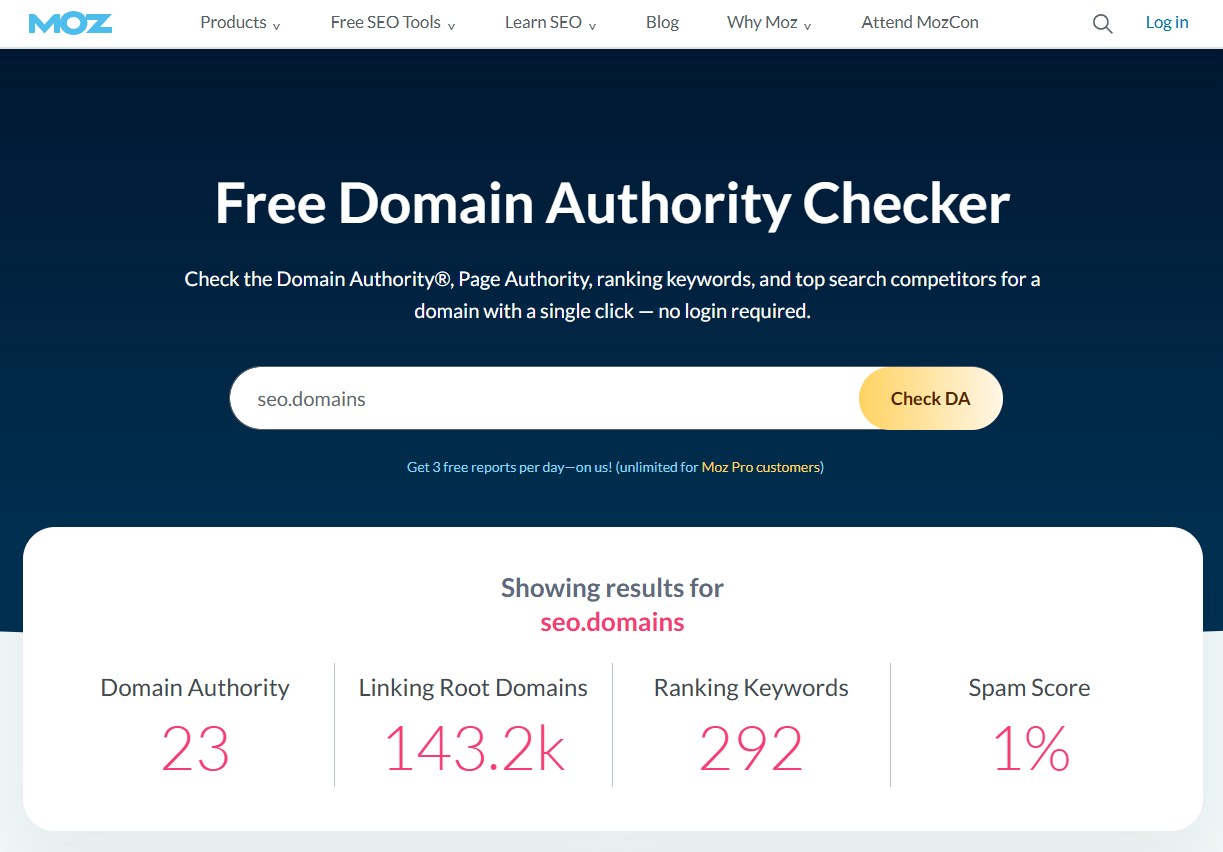
How aged-domain buyers use niche-relative Domain Authority benchmarks at the SEO Domains marketplace
Aged-domain buyers read the Domain Authority value of each candidate against the top-10 SERP benchmark of the target niche, with an entry target at or above the niche median.
The benchmark turns an absolute Domain Authority number into a competitive verdict for the vertical the buyer intends to enter.
The SEO Domains catalogue applies the niche-relative read at inventory ingestion and surfaces it per listing for buyer review.
| Buyer intent niche | Entry target rule | Catalogue screening criterion |
|---|---|---|
| Finance and insurance | DA 70+, at or above the ~80 median | Premium-tier screening plus Spam Score audit plus Managed Account support |
| Health and YMYL | DA 65+, at or above the ~75 median | 7-vector inheritance screen plus topical-relevance check |
| Legal and law firms | DA 60+, at or above the ~70 median | Spam Score audit plus link-history verification |
| Technology, SaaS, and iGaming | DA 50+, at or above the ~60 median | Trust Flow validation plus anchor-distribution review |
| E-commerce, affiliate, niche content, local | DA 25-45, at or above the niche median | Multi-metric screen plus topical relevance check |
The niche-relative read resolves an absolute Domain Authority number into a competitive verdict.
An absolute Domain Authority number means nothing until it reads against the niche the domain competes in.
The four-step read converts the number into a verdict. Name the target niche, pull the top-10 SERP, take the niche median, then read the candidate Domain Authority against that median instead of against an absolute grade.
The read resolves at the SEO Domains catalogue, where every listing already shows the Domain Authority value next to the top-10 SERP median of the relevant vertical.
The catalogue surfaces the Domain Authority value against the niche benchmark per listing.
SEO Domains catalogue listings show the Domain Authority value alongside the top-10 SERP median of the relevant vertical, so a buyer reads the candidate against the competitive baseline it will face.
The comparison is the operational shortcut to the SERP-relative read a practitioner would otherwise run by hand for each candidate.
Constantin Oesterling has documented the same benchmark-against-the-niche screening discipline across guest-posting authority audits through 2021 to 2024.
ICANN-accredited transfer preserves the niche-relative profile through ownership change.
SEO Domains operates with ICANN-accredited registrar transfer protocols.
The Moz Mozscape index records link profiles by hostname and propagates the inherited Domain Authority to the new owner without re-validation, and the parallel Ahrefs and Majestic indexes carry Domain Rating, Trust Flow, and Citation Flow.
Buyers acquire the established Domain Authority that the catalogue’s 7-vector inheritance screen verified against the niche benchmark at inventory ingestion, so the inherited profile matches the vertical it enters.
