 BUY WEBSITES
 BUY DOMAINS
 LOGIN
LOGIN
 SIGNUP



Domain drop schedules by TLD: .com, .net, .org and Verisign mechanics
Domain drop schedules vary by TLD because each registry operates an independent daily batch processing window.
Three gTLD registries anchor the daily aged-domain calendar:
- Verisign processes
.comand.netdeletions starting at 14:00 Eastern Time (18:00 UTC during EDT). - Public Interest Registry drops
.orgaround 14:30 to 15:30 UTC. - Identity Digital releases
.infoaround 10:00 to 10:30 UTC.
Drop-catchers align operations against these documented windows.
Buyers who prefer timing-agnostic acquisition browse the 220,000+ curated aged-domain catalogue on SEO Domains. Purchases complete through ICANN-accredited transfer at any time of day.
What time do most .com and .net domains drop?
Verisign processes .com and .net deletions starting at 14:00 Eastern Time (18:00 UTC during EDT). The daily drop batch lasts up to one hour.
The exact moment any specific domain releases within the batch is non-deterministic from the buyer's external position. Drop-catchers maintain EPP sessions throughout the window.
Registered & resolving
0–45 days
30 days
5 days, registry-only
Daily registry batch
First valid EPP create wins
.com and .net daily drop batch at 14:00 Eastern Time (18:00 UTC during EDT). The batch processes pending-delete entries for up to one hour. Buyers in Pacific time observe the start at 11:00 AM; buyers in Central European time observe 19:00. Times current as of 26 May 2026.Verisign batch processing begins at 14:00 ET daily.
The Verisign drop window is the highest-volume event in the aged-domain calendar. The .com namespace holds the largest concentration of high-value aged inventory.
The 14:00 Eastern Time start is documented in Quora answers from registrar staff and in community observations published on NamePros. That start time translates across the major zones:
- UTC. 18:00 during Daylight Saving (March to November); 19:00 during Standard time (November to March).
- Pacific Time. 11:00 AM PT.
- Central European Time. 19:00 to 20:00, depending on the season.
The Eastern Time clock equals 18:00 UTC during Daylight Saving.
Drop-catchers operating in time zones outside Eastern align their EPP sessions and registrar accreditation pools against the UTC reference. The 18:00 UTC anchor during EDT is the industry-standard reference for the Verisign drop event.
Operations teams handle the EST shift by adjusting clock alarms 1 hour forward in November and 1 hour back in March, matching the US Daylight Saving transitions.
The Pacific Time equivalent is 11:00 AM PT.
West Coast drop-catching operations align morning shifts to the 11:00 AM PT drop event. The window runs through 12:00 noon PT during the up-to-one-hour batch processing. Aged-domain investors in California, Oregon, and Washington run the daily drop check at this anchor time.
The Quora-documented Verisign behaviour confirms the 2:00 PM ET start.
A Quora answer from a domain industry contributor states the Verisign daily drop process begins each day at 2:00 PM Eastern Time and iterates over the dropping domain names in a registry-internal order.
The process lasts up to one hour according to the same contributor.
The Quora reference complements the Internet Earnings drop time matrix, which lists the same 14:00 ET window for .com and .net.
The drop event sits at the end of the Domain pending-delete phase: Duration and mechanics, which precedes drop by 5 calendar days. It follows the 30-day Redemption period (RGP) explained.
How long does the Verisign drop window last each day?
The Verisign daily batch lasts up to one hour from the 14:00 ET start. The registry processes pending-delete entries in registry-internal order, releasing individual domains at different moments within the window.
Drop-catching services maintain persistent EPP sessions throughout the hour to compete for each freshly-released name.
The batch processes pending-delete entries in registry-internal order.
The exact order in which Verisign processes individual domain names during the batch is not publicly disclosed.
Industry observation suggests the registry processes names in an internal sequence that drop-catching services attempt to model through repeated catch attempts and timing analysis.
The order is consistent enough within a single batch that aged-domain operators tune their EPP submission patterns to the observed sequence.
The full run takes up to one hour from the 14:00 ET start.
The one-hour ceiling is documented in the Quora answer and confirmed by community observations on NamePros. A daily drop event with 100 to 500 expiring high-value .com domains takes the full window to clear at the registry layer.
Drop-catchers track their session-by-session catch logs against the hour-long window to identify which release minutes produced their successful catches and refine subsequent submissions.
Individual domain releases occur at different moments within the batch.
Two domains in the same daily batch can release minutes apart. A drop-catcher waiting for a specific name needs to keep its EPP sessions firing throughout the full hour to maximise catch probability.
The variable release timing within the window is one factor that pushes drop-catching infrastructure investment toward dozens to hundreds of registrar accreditations: more accounts equal more concurrent EPP sessions firing against the registry during the same hour.
Drop-catching services maintain EPP sessions throughout the window.
A persistent EPP session held open against the registry reduces the round-trip latency for each create command compared to fresh session establishment. Drop-catching services hold sessions open across the daily window across all their accredited registrar accounts.
The session count plus the per-session request rate equals the total effective request volume that competes for each releasing name. The infrastructure scale required to operate competitively at this layer represents capital investment that smaller operators cannot match.
How do .org, .info, and .me drop schedules differ from .com?
Three non-Verisign windows operate independent batch schedules across the 24-hour cycle:
- Public Interest Registry drops
.orgaround 14:30 to 15:30 UTC. - Identity Digital drops
.infoaround 10:00 to 10:30 UTC. - Verisign releases
.meat 02:30 to 03:00 UTC.
Internet Earnings remains the industry-cited reference for the matrix.
02:30 UTC
Verisign
04:00 UTC
auDA
10:00 UTC
Identity Digital
14:30-15:30 UTC
PIR
17:00 UTC
CIRA
18:00 UTC
Verisign (peak)
.com/.net peak at 18:00 UTC is the highest-volume event of the day. Drop-catching operations that target multiple TLDs schedule against this UTC timeline to align infrastructure across the full daily cycle.| Registry | TLD | UTC drop window | Eastern Time | Pacific Time |
|---|---|---|---|---|
| Verisign | .com .net | 18:00 to 19:00 UTC (EDT) | 14:00 to 15:00 ET | 11:00 to 12:00 PT |
| Public Interest Registry | .org | 14:30 to 15:30 UTC | 10:30 to 11:30 ET | 07:30 to 08:30 PT |
| Identity Digital | .info | 10:00 to 10:30 UTC | 06:00 to 06:30 ET | 03:00 to 03:30 PT |
| Verisign | .me | 02:30 to 03:00 UTC | 22:30 to 23:00 ET (previous day) | 19:30 to 20:00 PT (previous day) |
| CIRA | .ca | ~17:00 UTC | 13:00 ET | 10:00 PT |
| auDA | .au | ~04:00 UTC | 00:00 ET | 21:00 PT (previous day) |
.com Verisign window remains the highest-volume event; .org and .info operate independent earlier-UTC windows. Times current as of 26 May 2026; verify with the registry before relying on a specific minute.The .org window of 14:30 to 15:30 UTC equals 10:30 to 11:30 ET in Daylight Saving.
Public Interest Registry processes .org deletions earlier in the UTC day than Verisign processes .com. Aged-domain investors who specialise in .org inventory align morning operations to the 14:30 UTC start.
The 1-hour window from 14:30 to 15:30 UTC parallels the Verisign batch duration; PIR releases individual .org domains across the hour in registry-internal order.
The .info window of 10:00 to 10:30 UTC equals 06:00 to 06:30 ET.
Identity Digital, the registry operator behind .info, releases the daily batch much earlier in the UTC day than the gTLD competitors.
The 10:00 UTC window equals 06:00 ET, which means East Coast drop-catchers run a pre-dawn catch operation.
The early window reduces competing traffic from operators who target the higher-volume .com drop event later in the day.
The .me window of 02:30 to 03:00 UTC equals 22:30 to 23:00 ET on the previous day.
Verisign also operates the .me ccTLD registry (Montenegro). The 02:30 UTC window equals 22:30 ET on the calendar day before the published drop date, which is one of the more confusing timezone artifacts in the drop-catching calendar.
Buyers tracking .me domains adjust their daily-drop date arithmetic by one day to align local calendar entries with the registry's UTC reference.
Internet Earnings remains the industry-cited reference for TLD drop time matrices.
The Internet Earnings page on domain drop times has been the primary aggregated reference for .com, .net, .org, .info, and .me windows across the aged-domain investor community for over a decade.
The page is community-cited but unmaintained recently; minute-level precision is best verified against current registry status pages before time-sensitive action.
The sibling articles on Active registration status and what it signals for SEO and Grace period and auto-renew grace cover the lifecycle phases that precede the drop event.
Why does Verisign not publish exact drop times?
Verisign does not publicly disclose the exact order or precise timing of individual domain drops. The registry retains operational flexibility, and drop-catching services discover timing through continuous EPP poll commands and zone-file diff feeds.
Industry knowledge derives from observed patterns and community-shared data across years of drop-catching operations.
Beginning each day at 2pm ET, Verisign's systems iterate over the dropping domain names in a certain order and change their status from registered to available one by one, with the whole process lasting up to an hour.
Quora · Domain industry contributor answer · "When does Verisign release .com domains after they're pending delete?"
Verisign retains operational flexibility by not publishing exact timing.
The Verisign disclosure policy treats the deletion processing schedule as an operational matter instead of a registrar-facing service-level commitment.
Verisign publishes the 5-day pending-delete duration as part of ICANN consensus policy but does not publish the daily batch start minute or the within-batch processing order.
The operational discretion lets the registry tune the schedule against capacity, maintenance, and audit considerations without requiring registrar-facing announcement.
The majority of expired names that enter the full lifecycle never reach the drop event because the registrant restores during grace or redemption, which means the daily drop batch handles a small fraction of the inventory that expires daily.
Industry knowledge derives from observed drop patterns over years.
The aged-domain community has accumulated knowledge of Verisign drop timing through repeated catch attempts, EPP session logging, and community sharing on platforms such as NamePros and DomainNameWire.
The 14:00 ET start time and up-to-one-hour duration are well-established in this community knowledge, even though Verisign itself does not publish the figures.
Drop-catching services discover timing through continuous EPP polling.
EPP poll commands let an accredited registrar query the registry for changes to its domain inventory.
Drop-catching services run EPP polls throughout the daily window to detect the moment any specific name's status flips from pendingDelete to "available for create".
The polling overhead is non-trivial; services balance poll frequency against registry rate limits and EPP session budget.
Academic research has documented the technical mechanics of the drop event and the operational patterns of drop-catching registrars, including the EPP session architecture and the registrar accreditation pooling strategy.
seclab.nu · "Domain Registrar Behaviour During the Drop" · Internet Measurement Conference (IMC) 2018 paper
Zone-file diff feeds expose pending-delete entries 5 days before drop.
ICANN-accredited registries publish daily zone-file snapshots through the Centralised Zone Data Service. Subscribers compare consecutive snapshots to identify newly-entered pending-delete entries.
The 5-day countdown from entry detection to drop event is the basis for the entire drop-catching calendar.
The zone-file diff approach gives drop-catchers and aged-domain operators the deterministic input that pairs with the non-deterministic within-batch timing.
How can buyers calculate when a specific domain will drop?
Buyers calculate the drop date by adding 5 days to the start of pending-delete, then apply the registry's daily drop window in the buyer's local timezone.
The interactive calculator below computes drop date and drop time for major gTLDs across UTC, Eastern, Pacific, and the user-detected local time zone.
| City | Time zone | Verisign .com drop start |
|---|---|---|
| New York | America/New_York (EDT) | 14:00 ET (drop date) |
| Los Angeles | America/Los_Angeles (PDT) | 11:00 PT (drop date) |
| São Paulo | America/Sao_Paulo (BRT) | 15:00 BRT (drop date) |
| London | Europe/London (BST) | 19:00 BST (drop date) |
| Berlin | Europe/Berlin (CEST) | 20:00 CEST (drop date) |
| Mumbai | Asia/Kolkata (IST) | 23:30 IST (drop date) |
| Tokyo | Asia/Tokyo (JST) | 03:00 JST (next calendar day) |
| Sydney | Australia/Sydney (AEST) | 04:00 AEST (next calendar day) |
.com daily drop start translated to major world cities. Global drop-catching operations align local on-call rosters against this matrix. The eight-city sample covers the highest-concentration aged-domain investor populations across the Americas, Europe, and Asia-Pacific.The 5-day pending-delete duration provides the deterministic countdown.
Understanding the calculation method begins with the deterministic 5-day pending-delete duration that lasts exactly 5 calendar days for ICANN-accredited gTLDs.
A buyer who detects a domain entering pending-delete via WHOIS or RDAP lookup knows the drop event will occur 5 calendar days later.
The deterministic countdown is the foundation of the entire drop-catching calendar along the full lifecycle path.
The sibling article on Domain pending-delete phase: Duration and mechanics covers the 5-day window in detail across all four lifecycle phases as the domain expires through redemption to drop.
Adding 5 days to the pendingDelete start date predicts the drop date.
The arithmetic is straightforward. Day 1 of pending-delete plus 5 days equals the drop date.
The calculator above performs the full lifecycle arithmetic from expiry through auto-renew grace, redemption, and pending-delete to produce the projected drop date. The arithmetic assumes no registry maintenance windows and no registrar-specific grace variations beyond the published durations.
The registry's daily window applies on the drop date.
The drop event happens during the registry's daily batch processing window on the drop date. The window differs by registry:
.comand.net: 14:00 to 15:00 ET..org: 14:30 to 15:30 UTC..info: 10:00 to 10:30 UTC.
The calculator translates the registry window into the user's local time zone using the browser's Intl.DateTimeFormat API.
Buyer-side timezone conversion completes the calculation.
Drop-catchers in time zones outside Eastern need precise local-time anchors to set operational alarms. The calculator outputs the drop time in UTC, Eastern, Pacific, and the user's detected local time zone simultaneously.
The four-timezone output is unique to this calculator; competing tools cite the UTC reference alone and leave the conversion to the buyer.
As with any drop date prediction tool, the dates are indicative; the registry retains the right to adjust the schedule, and the disclaimer in the calculator output reflects that operational reality.
Domain lifecycles differ between ICANN gTLDs and ccTLD frameworks, and the calculator usage assumes the ICANN gTLD baseline unless the chosen TLD signals a ccTLD path.
How do ccTLD drop schedules actually differ from gTLD timing?
ccTLDs operate independent batch schedules and divergent policy frameworks. Three contrasting models show the range:
- Nominet handles
.ukthrough a 90-day suspension model without a fixed pending-delete window. - auDA drops
.auat Sydney close of business. - The
.inregistry releases at random times across the pending-delete window.
Nominet replaces the drop event with a 90-day suspension model.
The .uk registry, operated by Nominet, replaces the ICANN pending-delete model with a 90-day suspension period during which the original registrant restores the domain at no separate fee.
The key differences between ICANN and Nominet lifecycles centre on the absence of a separate pending-delete batch and the longer registrant-protection window.
At the end of the 90 days, the registry deletes the domain directly without a separate pending-delete batch event. The model reflects Nominet's registrant-protection priorities set independently of ICANN consensus policy.
auDA drops .au at Sydney close of business near 04:00 UTC.
The auDA .au registry operates a daily drop batch around 04:00 UTC, which corresponds to Sydney close of business in the Australian Eastern Standard Time zone.
Drop-catchers targeting .au inventory run early-morning UTC operations or late-evening Australian operations, depending on the operator's geographic base. The Sydney anchor is the operational reference for the registry batch.
DENIC skips the pending-delete phase entirely for .de.
The DENIC .de registry releases lapsed domains immediately at the end of the registrar grace period without a formal pending-delete window. The absence of the deterministic pending-delete batch run makes drop timing for .de domains harder to predict.
AFNIC (.fr), EURid (.eu), and JPRS (.jp) follow comparable patterns, with no published pending-delete batch schedules. The sibling article on Domain pending-delete phase: Duration and mechanics covers ccTLD variations in detail.
The .in registry releases at random times across the pending-delete window.
The TIGM guide on .in drop time notes that the .in registry releases domains at random times across the 5-day pending-delete window, with no consistent daily anchor.
Drop-catchers targeting .in inventory run continuous monitoring across the full 5-day window because the release can happen at any hour.
The continuous-monitoring approach contrasts with the scheduled batch operations that drop-catchers run against Verisign, PIR, and Identity Digital windows.
How do registry maintenance windows affect drop times?
Registry maintenance shifts scheduled drop times when the registry pauses EPP operations. Verisign publishes maintenance notices through registrars and status pages.
A 2026 Verisign maintenance window in May affected .com and .net operations for 45 minutes, delaying the drop run accordingly.
Verisign publishes scheduled maintenance through registrar status pages.
The Verisign registry team publishes maintenance windows on the corporate status page and propagates the notices through ICANN-accredited registrars. Registrars republish the windows through their own status pages and customer-facing notifications.
Drop-catching operators subscribe to these status feeds to maintain awareness of scheduled disruption windows that affect daily drop operations.
A May 2026 Verisign maintenance window delayed .com/.net operations 45 minutes.
The Spaceship Status notification on 16 May 2026 announced a 45-minute Verisign maintenance window covering .com and .net operations.
The window ran from 21:00 EDT to 21:45 EDT on 16 May, corresponding to 01:00 to 01:45 UTC on 17 May.
The maintenance occurred outside the standard 18:00 UTC drop window, so the daily drop on 16 May proceeded normally, but registrar EPP operations during the 45-minute pause were unavailable for any operations including drop-catching submissions.
Drop-catching operations track registry status pages alongside the drop schedule.
Operational discipline at the drop-catching infrastructure layer pairs the scheduled drop calendar with the live registry status monitoring.
A maintenance window during the standard drop window would push the drop event into the post-maintenance period or cancel the day's drop entirely depending on the maintenance type.
The monitoring requirement adds operational overhead but produces more reliable catch outcomes than a fixed-schedule approach that ignores maintenance disruption.
Identity Digital, PIR, and CIRA publish independent maintenance schedules.
Each registry operator publishes maintenance windows on its own corporate status page. Identity Digital, Public Interest Registry, and CIRA do not coordinate maintenance schedules with Verisign or with each other.
Drop-catching operators targeting inventory across multiple registries monitor each registry's status feed independently. The monitoring overhead scales with the number of registries an operator targets.
What questions are frequently asked about drop timing?
Drop-catchers raise four recurring questions about drop timing:
- How to confirm a drop date. A WHOIS
pendingDeletecheck signals the final 5-day countdown. - Whether maintenance windows delay drops. Yes, when the window overlaps the standard drop time.
- How to convert UTC to local time. The registry publishes UTC; the buyer applies the local offset.
- Whether all TLDs drop at the same time. No, every registry sets an independent schedule.
Q1How can a domain's drop date be confirmed?
Run a WHOIS or RDAP lookup. If the domain carries the pendingDelete EPP status without an accompanying redemptionPeriod substatus, the drop is 5 calendar days away. The calculator above computes the exact projected drop date and time for the major gTLDs.
Q2Do registry maintenance windows delay drop events?
Yes when the maintenance overlaps the standard drop window. The 5-day pending-delete countdown still completes on the published drop date, but the actual deletion processing shifts to the post-maintenance period or to the next available batch. Registry status pages publish maintenance windows in advance.
Q3How is UTC converted to local time?
The registry publishes the daily drop window in UTC. The browser-detected local time zone applies the offset. For Eastern Daylight Time the offset is UTC minus 4 hours; for Eastern Standard Time the offset is UTC minus 5 hours. The calculator above performs the conversion automatically.
Q4Do all TLDs drop at the same time?
No. Each registry operator sets an independent batch processing schedule. Verisign drops .com and .net at 14:00 ET, PIR drops .org at 14:30 UTC, Identity Digital drops .info at 10:00 UTC. The TLD drop time matrix in Figure 2 covers the major registries.
Q5Does Verisign publish exact drop times?
No. Verisign does not publicly disclose the exact within-batch ordering of domain releases. Industry knowledge derives from observed patterns documented on Quora, NamePros, and Internet Earnings. The published references give the daily start time and the up-to-one-hour batch duration.
Q6What is the alternative to operating against the drop clock?
The SEO Domains marketplace lists 220,000+ curated aged domains acquired post-drop. Buyers browse the catalogue at any time, filter by metrics, and complete purchases through ICANN-accredited transfer without aligning operations to TLD-specific drop windows. The catalogue path is timing-agnostic.
The WHOIS or RDAP pendingDelete status confirms the drop date.
A WHOIS or RDAP query against the target domain returns the current EPP status codes. The pendingDelete status without an accompanying redemptionPeriod substatus signals the final 5-day countdown to drop.
The query is repeated daily to monitor status changes; a small number of domains exit pending-delete back into redemption if the registrar processes a restore command, although this is rare in the final 5-day phase.
Maintenance windows do delay drop events when they overlap the standard window.
A maintenance window that overlaps the standard drop window shifts the drop event to the post-maintenance period or to the next available batch run.
The 5-day pending-delete countdown completes regardless of maintenance; the actual deletion processing is what shifts. Registry status pages publish maintenance windows with at least 24 hours lead time, giving drop-catchers time to adjust scheduled operations.
Time zone conversion uses standard UTC reference plus local offset.
Drop-catching operators outside North America convert the published UTC reference to their local time. London-based operators add the UTC offset (zero during BST, plus 1 during GMT) to align local clocks.
Sydney-based operators add 10 or 11 hours depending on Australian DST. The calculator above performs the conversion using the browser's Intl.DateTimeFormat API and reports the result for the user's auto-detected local time zone.
TLDs operate independent registry batch schedules.
The 5-day pending-delete duration is uniform across ICANN-accredited gTLDs, but the daily drop window varies across registries.
Verisign sets the .com and .net schedule, PIR sets the .org schedule, Identity Digital sets schedules for each TLD in the legacy Donuts portfolio.
ccTLD registries set independent schedules according to their own policies, with auDA, CIRA, Nominet, DENIC, and others each operating independently.
How does TLD drop timing connect to aged-domain acquisition on SEO Domains?
Drop timing shapes the drop-catcher's daily operational schedule, but the SEO Domains catalogue offers a timing-agnostic alternative.
Buyers acquire from the 220,000+ curated catalogue at fixed prices through ICANN-accredited transfer at any time. No alignment against TLD-specific registry batch windows is required.
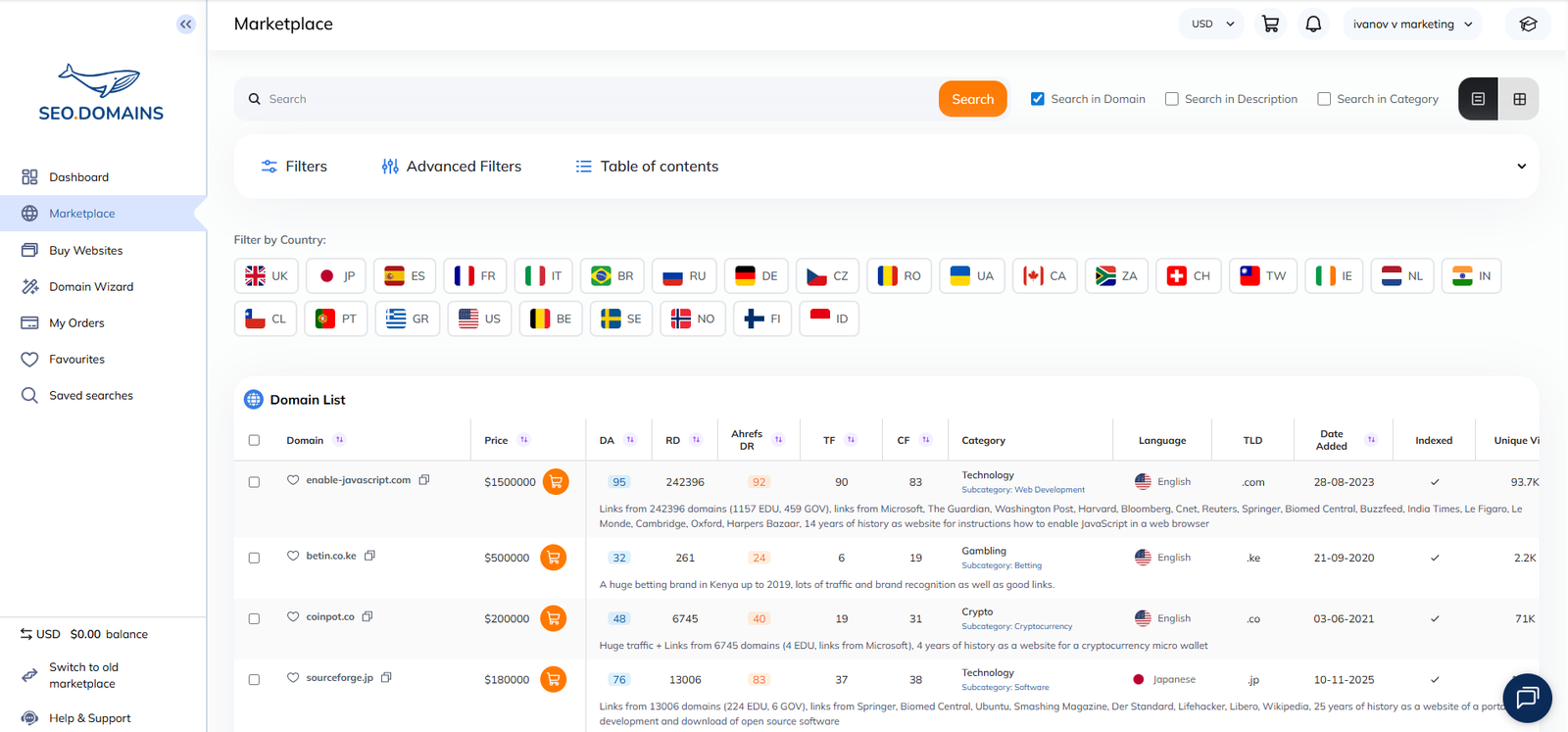
The 220,000+ curated catalogue is available for browsing at any time.
Each aged domain listed on SEO Domains has already cleared the drop event and entered the curated marketplace catalogue with documented registration history.
Buyers browse the catalogue 24 hours a day, filter by Domain Authority, referring domains, TLD, country, and topical category, and select listings that match their acquisition criteria.
No timezone alignment with a registry window is required because the inventory has already been captured.
Acquisition completes through ICANN-accredited transfer outside the drop event.
Every purchase on SEO Domains completes through the standard EPP transfer protocol that ICANN-accredited registrars use to relocate sponsorship between accreditations.
The transfer happens outside the registry drop event entirely; the buyer initiates the purchase, pays the catalogue price, and receives the domain through standard transfer mechanics.
The accreditation framework distinguishes the marketplace from generic aftermarket bidder pools that align acquisitions with the daily drop calendar.
The catalogue eliminates timezone alignment requirements for buyers.
A buyer in Sydney targeting a .com domain that drops at Verisign's 14:00 ET window faces a 04:00 AEDT operational window for direct drop-catching.
The SEO Domains catalogue removes this constraint entirely: the Sydney buyer browses the catalogue during local business hours and completes acquisition at any time. The same flexibility applies to buyers in London, Tokyo, Mumbai, or any other timezone outside Eastern.
Drop timing matters for buyers competing at the registry event; the catalogue path bypasses this constraint.
Operators who want exposure to specific names at the drop moment align operations against the registry windows documented in this article. Operators who want certainty of acquisition without operational constraints browse the curated catalogue.
The two paths serve different buyer profiles. The sibling article on Domain drop catching: How dropped domains become available covers the drop-catching path in detail.
The SEO Domains analytical desk treats a captured aged domain with an intact lifecycle record as a carrier of its accumulated backlink graph. A 301 redirect consolidates that documented equity onto the destination. That mechanic makes the curated post-drop inventory commercially valuable across both acquisition paths.
Acquire aged domains without aligning to the drop clock. Browse the 220,000+ curated aged-domain catalogue on SEO Domains at any time of day, filter by Domain Authority, referring domains, TLD, country, and category, and complete purchases through ICANN-accredited transfer mechanics. Browse the SEO Domains marketplace →
